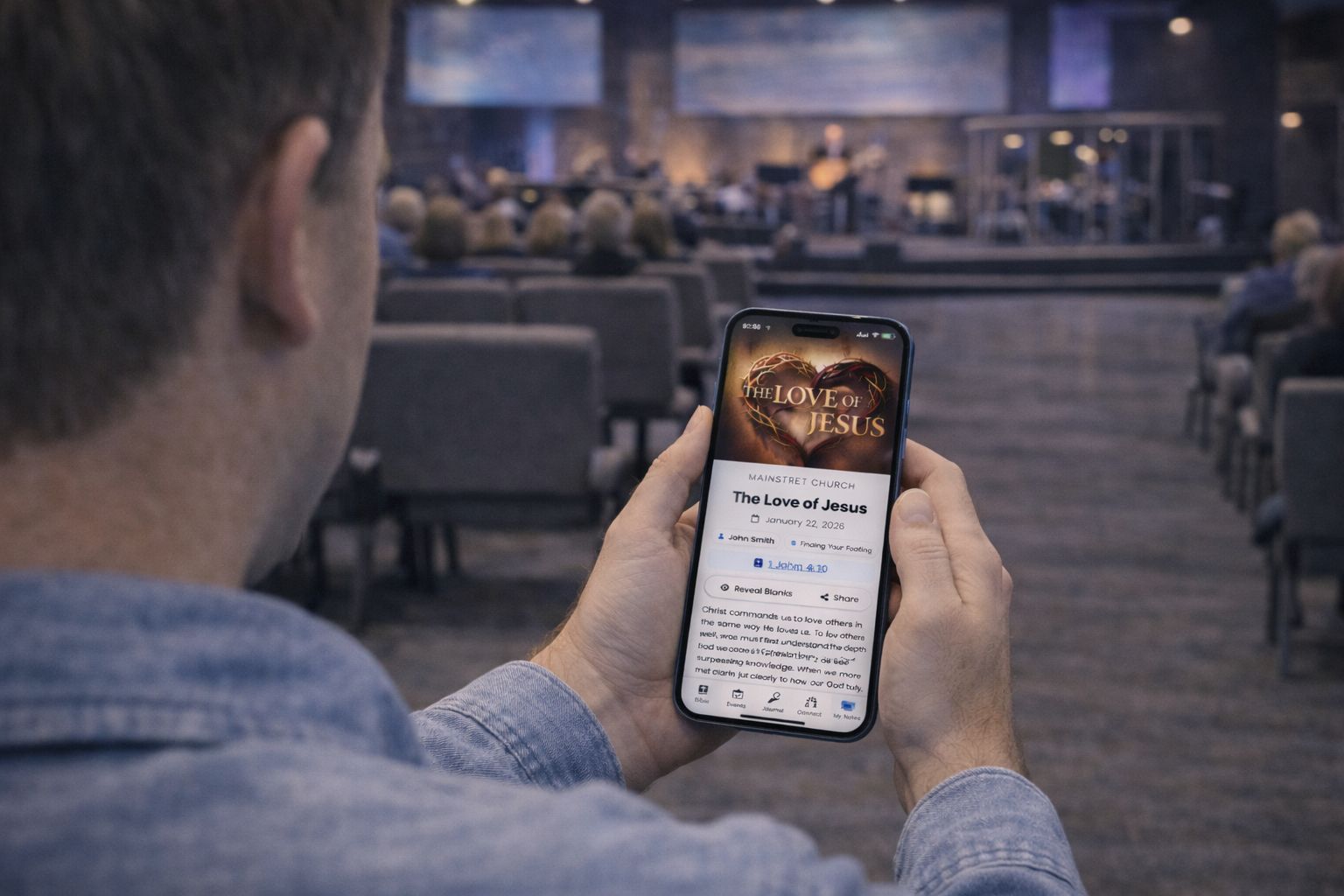
Useful Fill-in-the-Blank Notes
I’ll be honest — when I first heard about fill-in-the-blank sermon notes, I thought it sounded kind of gimmicky. Like something you’d do in a middle school classroom, not in a worship service. But after working with a few churches early on who were using them successfully, I completely changed my mind. When done right, they’re one of the most effective engagement tools a pastor has.
The problem most churches run into isn’t the concept. It’s the execution. They either make the blanks too easy (everyone fills them in from the slide before the pastor even says the word), or they make them so obscure that people give up and just listen passively — which defeats the whole point.
The Sweet Spot: Blanks That Make People Think
The best fill-in-the-blank notes aren’t about hiding random vocabulary words. They’re about creating moments of anticipation. You want people leaning in, waiting for a key idea. Here’s what works consistently well:
- Blank out the application, not the Scripture. Instead of hiding a word from the Bible verse everyone can read on screen, blank out the “so what” — the takeaway. “Because God is faithful, I can ________.” Now you’ve got people listening for the answer that applies to their actual life, not just filling in a word they already know.
- Use 7-10 blanks per sermon, max. More than that and it starts feeling like a worksheet. Fewer than 3 and people forget the notes are even interactive. The sweet spot for a 30-minute message is usually around 7-10 well placed blanks tied to your main points.
- Give people space to write their own thoughts. This is where most churches miss it. A fill in the blank note shouldn’t just be blanks, it should include space for personal reflection like “What stood out to me today” or open lines between sections. Real retention happens when someone puts the sermon into their own words.
And that's where FaithNotes shines! It makes room for both structure and reflection, and those thoughts are saved, searchable, and accessible anytime, turning a single Sunday message into something people can return to and grow from long after the service ends.
Going Digital Changes Everything
Paper fill-in-the-blank notes work fine. But they end up in the car, in the trash, or crumpled at the bottom of a purse. Digital notes stick around. People can pull them up on Wednesday when they’re processing something hard. They can search for that sermon from three months ago when they need to hear it again.
We built FaithNotes specifically around this idea. You drag in your Word doc, and our engine converts it to interactive fill-in-the-blank notes in about two seconds. No reformatting, no copying and pasting into some clunky builder. Your congregation opens a link or scans a QR code and they’re in — no app download, no account creation.
The thing that surprised us most was the data. Once churches could actually see analytics — who’s viewing notes, who’s saving them, who’s emailing them to themselves — they started adjusting their approach. One church noticed that notes with 5-6 blanks had 3x the save rate of notes with 10+ blanks. That’s the kind of insight you just can’t get from paper.
Start Simple
If you’ve never done fill-in-the-blank notes before, don’t overthink it. Take next Sunday’s sermon outline, pick the 5 most important phrases, and replace them with blanks. See what happens. You might be surprised how much more attentive your congregation becomes when they know they’re going to need to write something down.
And if you want to try it digitally, FaithNotes has a free 30-day trial — no credit card, no awkward sales call. Just upload a doc and see for yourself. If you’d rather not set it up on your own, just email [email protected] and we’ll help you get your first note live.